






The University of Maine System has now grown enrollment for nine consecutive semesters and achieved its highest headcount in more than a decade, defying demographics through region-leading affordability, growth in graduate and online programs for adult degree completors, improved retention and a proven value proposition — with alumni of the flagship earning more than double the state’s average annual median income
ORONO, Maine — Driven by region-leading affordability and rapid growth in career-advancing online degree programs for working adults, the University of Maine System (UMS) is defying demographic trends, starting the new academic year today with its highest enrollment in more than a decade.
While an official student count occurs in October, more than 28,000 learners will advance their educational attainment and upward mobility through Maine’s public universities this fall — marking the ninth consecutive semester of enrollment growth.
It is the System’s highest headcount since 2016. Reflecting the relevance and accessibility of courses, the number of credit hours learners are taking has also increased, as has the number of students considered full-time.
UMS is experiencing year-over-year gains in student headcount at the undergraduate, graduate, doctoral and law levels, while the number of Maine high schoolers getting a free head start on their in-demand postsecondary degree through System early college is down due to State funding limits.
“While the national enrollment cliff and changing federal landscape are intensifying financial pressures on our public institutions, it is significant that the University of Maine System is preparing more professionals for good-paying careers and strengthening the state’s employers and economy,” said Chancellor Dannel Malloy. “Against the strongest demographic headwinds in the nation, our System is a success story that our students, faculty, staff and all Mainers should take pride in. Nine consecutive semesters of enrollment growth demonstrate that Maine’s public universities are innovating to meet the market with high-quality, affordable programs that more students and families recognize as the region’s most proven path to opportunity and upward mobility.”
Despite demographics, growth aligned with workforce need at every UMS university
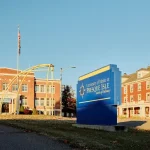
Overall System enrollment gains can be attributed to the University of Maine at Presque (UMPI) and its wildly successful YourPace (External Site) competency-based, fully online programs that enable working adults with some college to complete their career-advancing degree. UMPI is serving 70% more students than this time last year — and 251% more than five years ago — with more than four-fifths of its nearly 4,100 learners now enrolled in YourPace.
The University of Maine at Farmington (UMF), the University of Maine at Fort Kent (UMFK) and the University of Maine School of Law (Maine Law) also posted enrollment gains over last year.
According to U.S. Department of Education data (External Site), the Northeast is experiencing the nation’s steepest decline in high school graduates, and Maine’s graduating class is shrinking at a faster rate than those in 45 other states.
Still, UMS has improved undergraduate enrollment over last fall to more than 21,100 students, and is now enrolling the most undergrads since 2021.
Direct admissions for Maine high school students, seamless transfer without credit loss and guaranteed admission for graduates of the state’s community colleges, new degree programs aligned with workforce needs and the most affordable four-year tuition in New England are also helping the System buck regional demographic and related enrollment trends.
For example, the University of Maine at Augusta, which offers free tuition to most Pell-eligible in-state students through its Pine Tree State Pledge (External Site) consistent with other so-called promise programs across the System, welcomed its largest incoming class of first-year, first-time students on record, with more than 300 new students starting there today. Meanwhile, the University of Southern Maine is seeing sharp growth in workforce-critical programs, including undergraduate accounting, social work and finance, as well as graduate occupational therapy.
Improving retention through innovation and investments in student success, funded by the Harold Alfond Foundation through UMS TRANSFORM (External Site)S, is also sustaining undergraduate enrollment while boosting Maine’s educational attainment and economy.
Meanwhile, employer demand for professionals with advanced degrees has led to another year of graduate gains. More than 5,200 graduate students are now enrolled, the highest ever. Beyond UMPI’s YourPace graduate growth, over the last five years, UMF has nearly doubled the number of students it serves with career-aligned master’s programs such as education and educational leadership (External Site) to 535, while UMFK’s nursing and other master’s degree programs have grown graduate enrollment through the System’s northernmost public university more than 10-fold from 23 students in 2022 to 247 today.
Maine Law also continues to increase the number of students it is preparing to address the state’s attorney workforce shortage and ensure statewide access to justice. With its top 100 national ranking (External Site), clinical opportunities and vibrant new campus at the Maine Center in downtown Portland, the state’s only law school has achieved its highest enrollment since the late 1990s, with 295 Juris Doctor students.
Also contributing to graduate growth are the record 635 Ph.D. students at the R1 University of Maine, where an increasing reputation for research excellence (External Site) and more opportunities for meaningful hands-on research learning continue to draw more doctoral students, despite pressures on federal funding and international enrollment. The flagship’s doctoral enrollment has increased 27% over the past five years.
UMFK’s online nursing practice doctoral degree program (External Site), launched in 2024 to address critical workforce needs in the state and region, has doubled in size to 24 students.
60,000+ door-opening degrees in the last decade
UMS is the state’s largest driver of educational attainment and economic development. Over the past decade, the System has awarded more than 60,000 door-opening degrees and certificates, led by those in majors most aligned with the state’s workforce needs, including business, education, healthcare, liberal arts, and engineering and computing.
Thanks to its fiscal stewardship and growing appropriations supported by recent legislatures and Gov. Janet Mills, Maine’s public universities are the most affordable in New England, with about 30% of undergraduates paying nothing out of pocket for tuition and mandatory fees. More than 40% of System undergraduates are considered first-generation students and their bachelor’s degree attainment rate (Word) is more than double the national average for this population. Working-age alumni of its flagship UMaine earn more than two times the state’s median earnings (External Site).
As part of its commitment to public transparency and accountability, the System’s real-time enrollment data is available online (External Site). A detailed enrollment report will be released in November, following a formal census of students on Oct. 15 after the course add/drop period.
About the University of Maine System
The University of Maine System (UMS) is the state’s largest driver of educational attainment and economic development and its seven public universities and law school are the most affordable in New England. Over the past two decades, UMS has awarded 106,362 degrees and spurred and strengthened thousands of small Maine businesses through its world-class research and development activities. For more information, visit www.maine.edu.
Media Contact:
Samantha Warren
Chief External & Governmental Affairs Officer
207-632-0389 / samantha.warren@maine.edu