







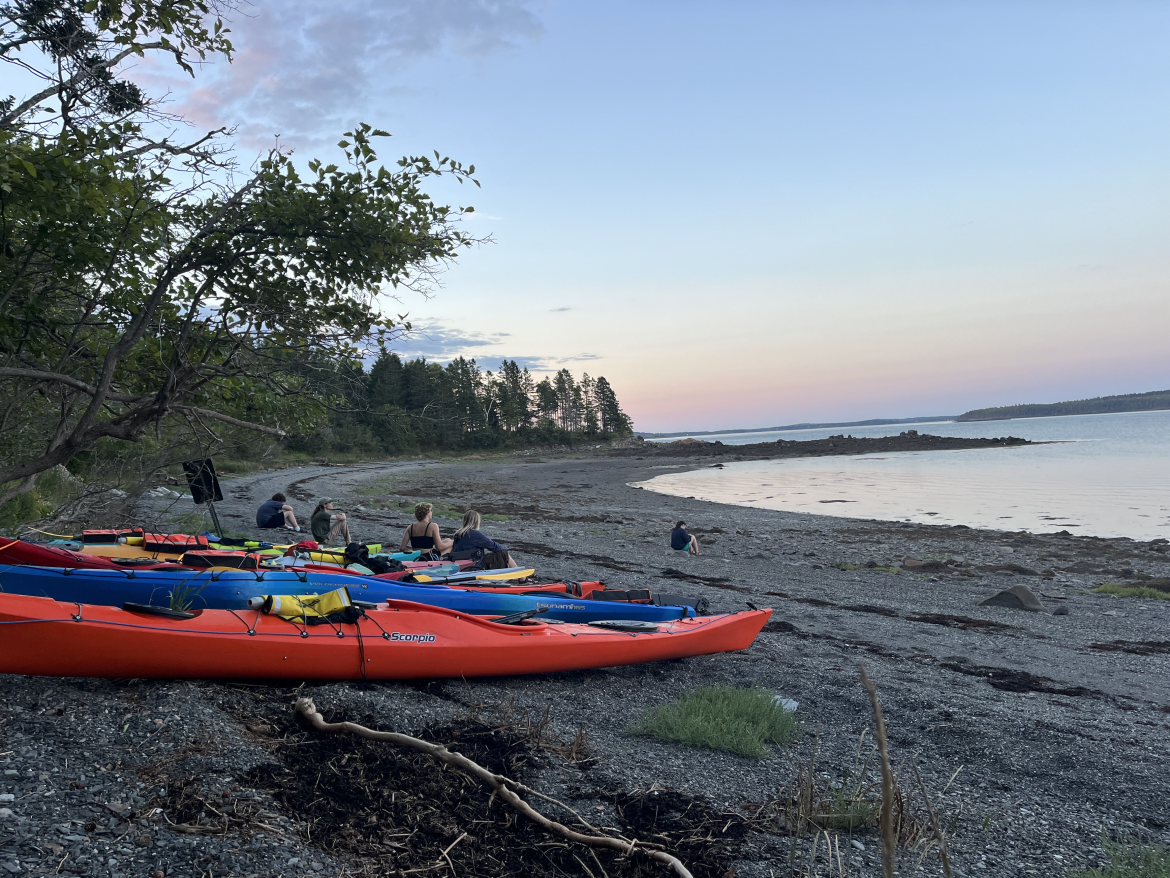
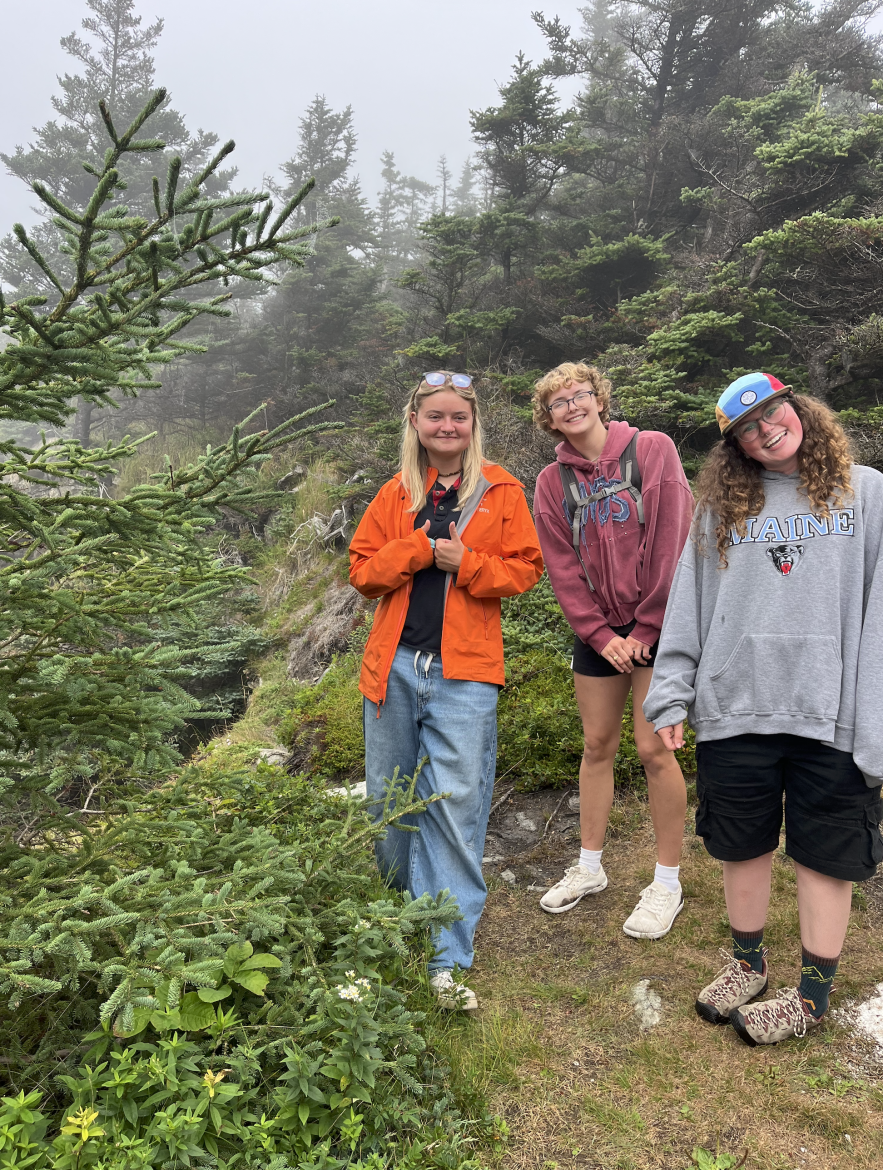
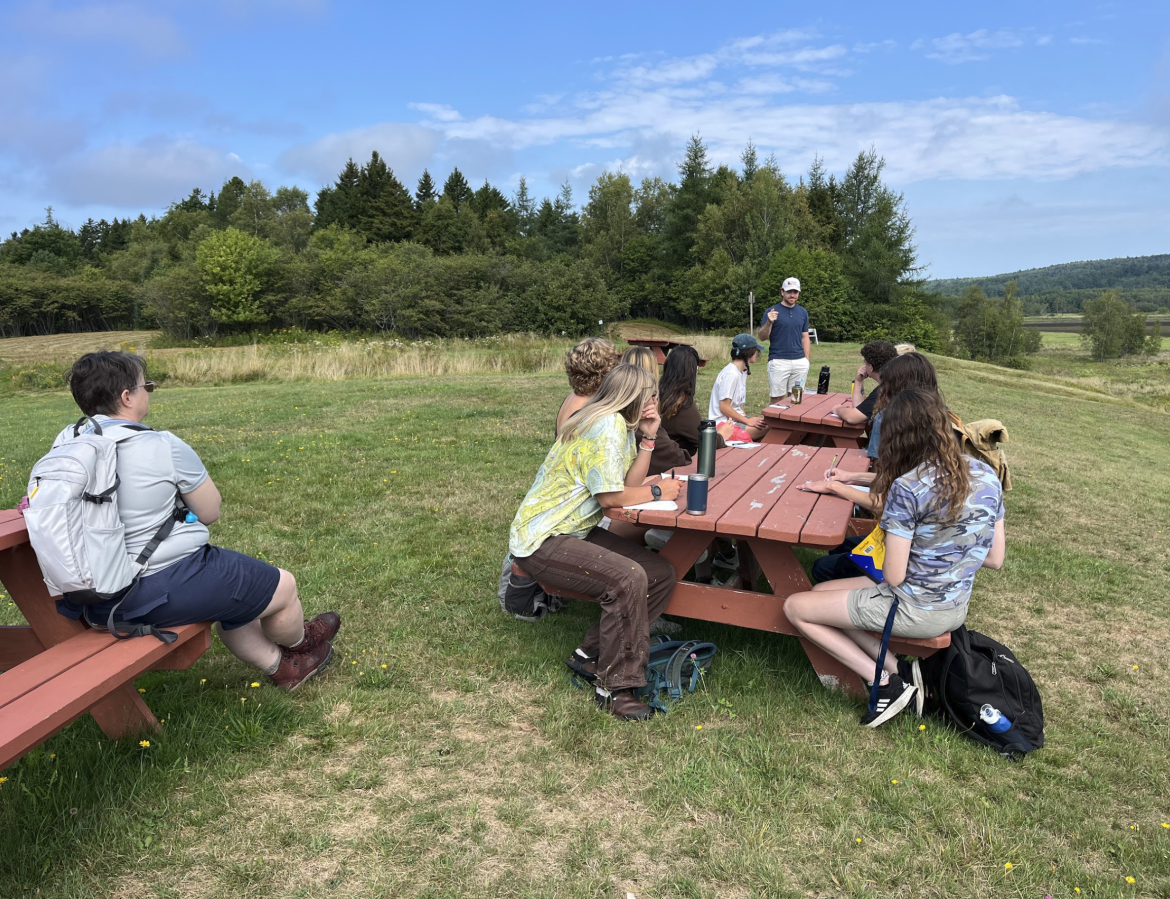
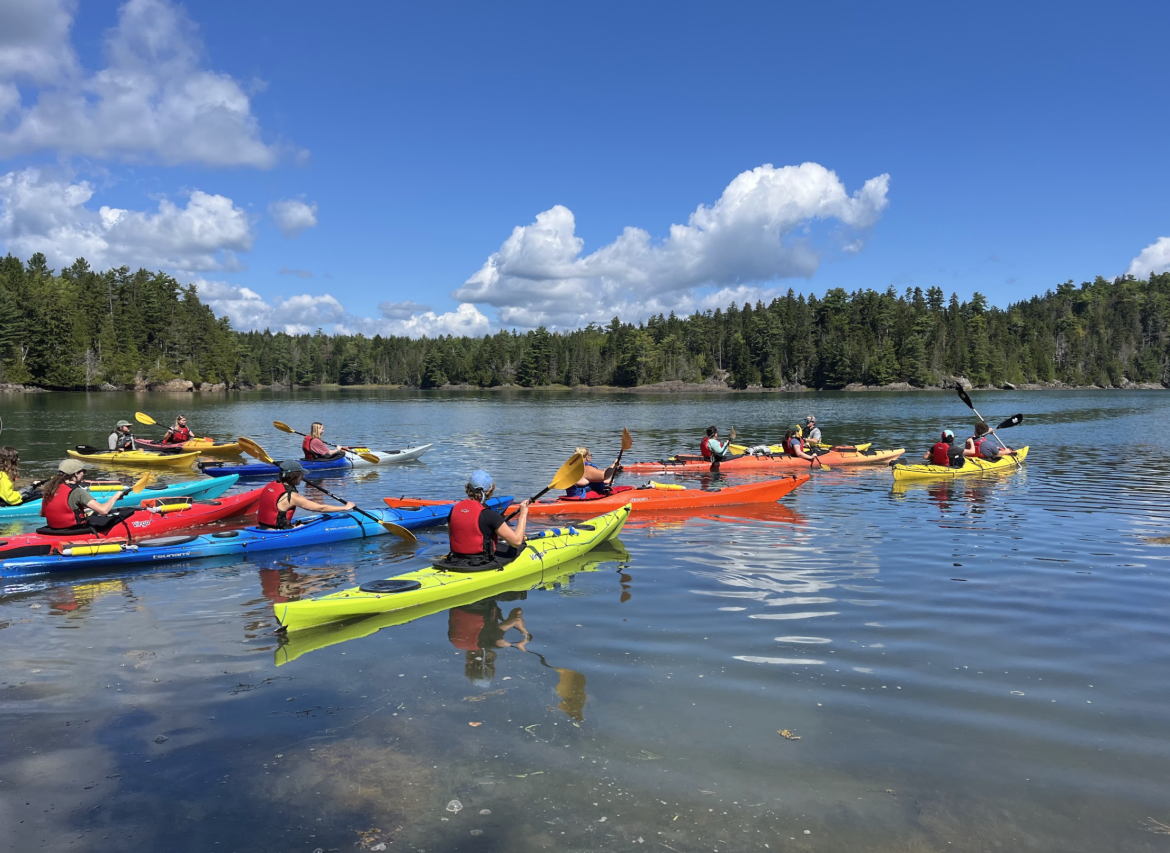
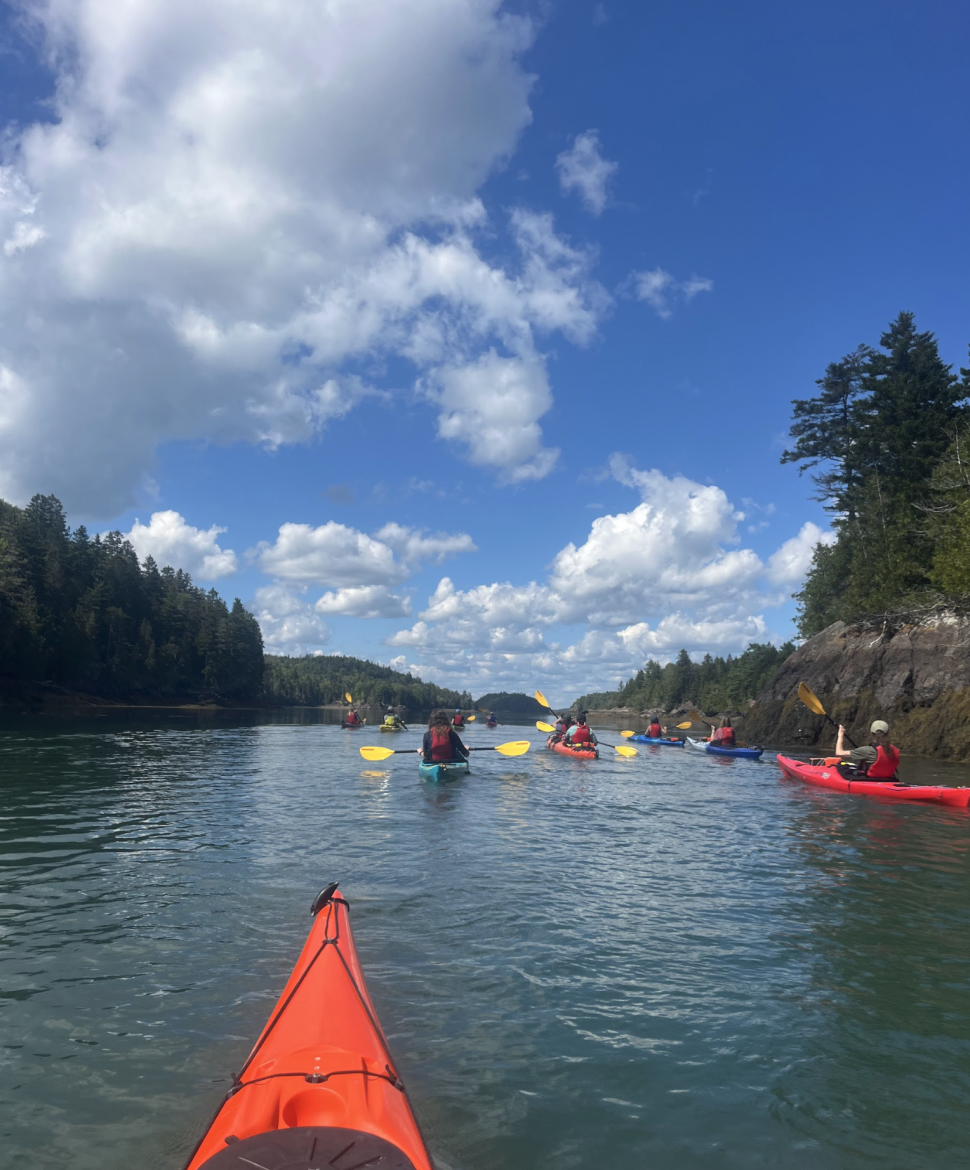
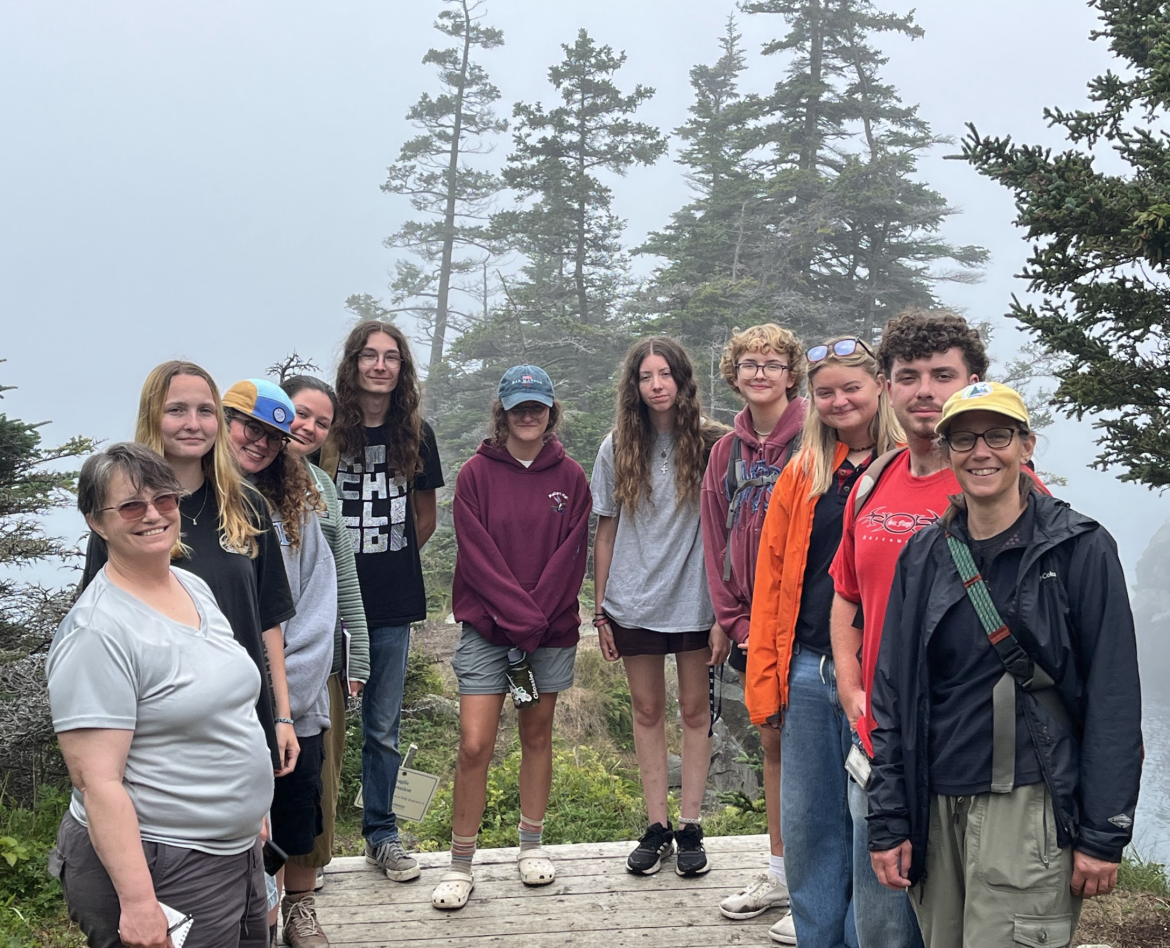
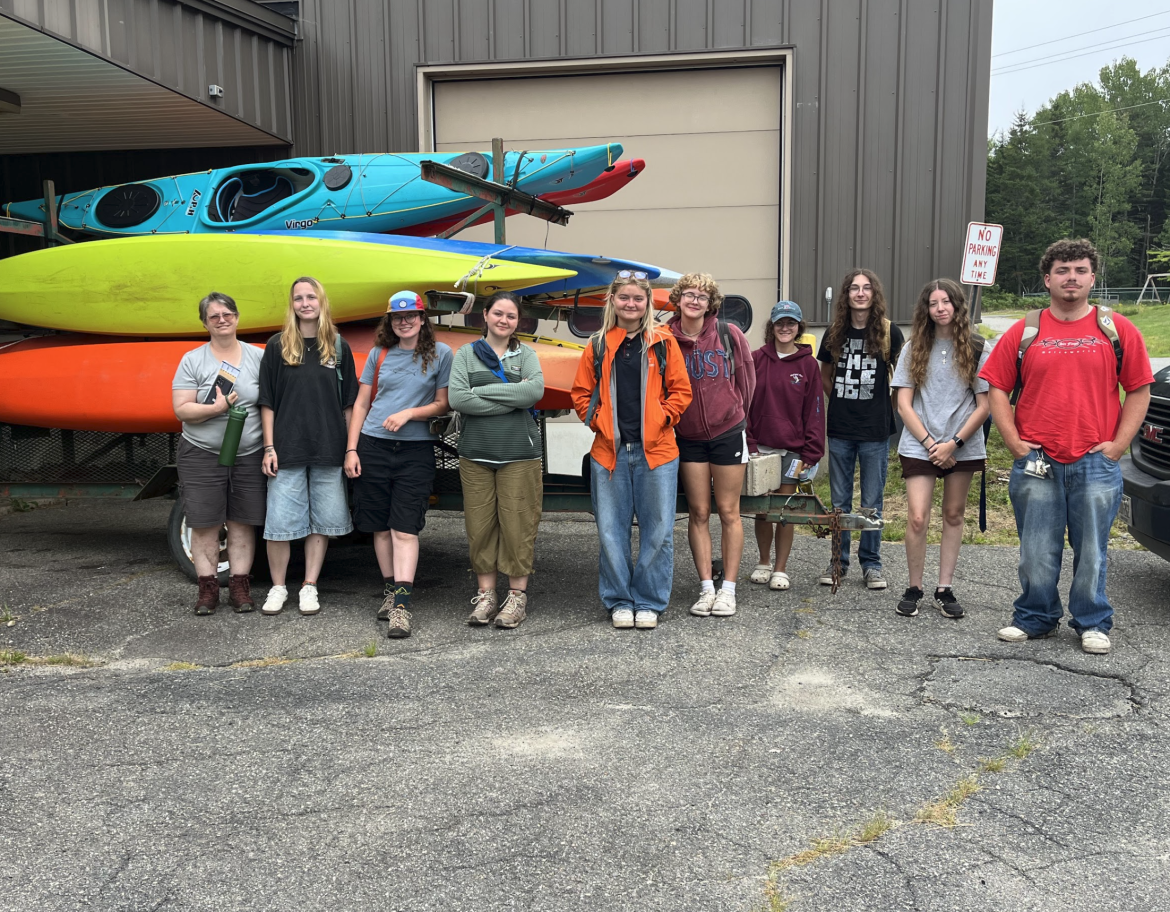
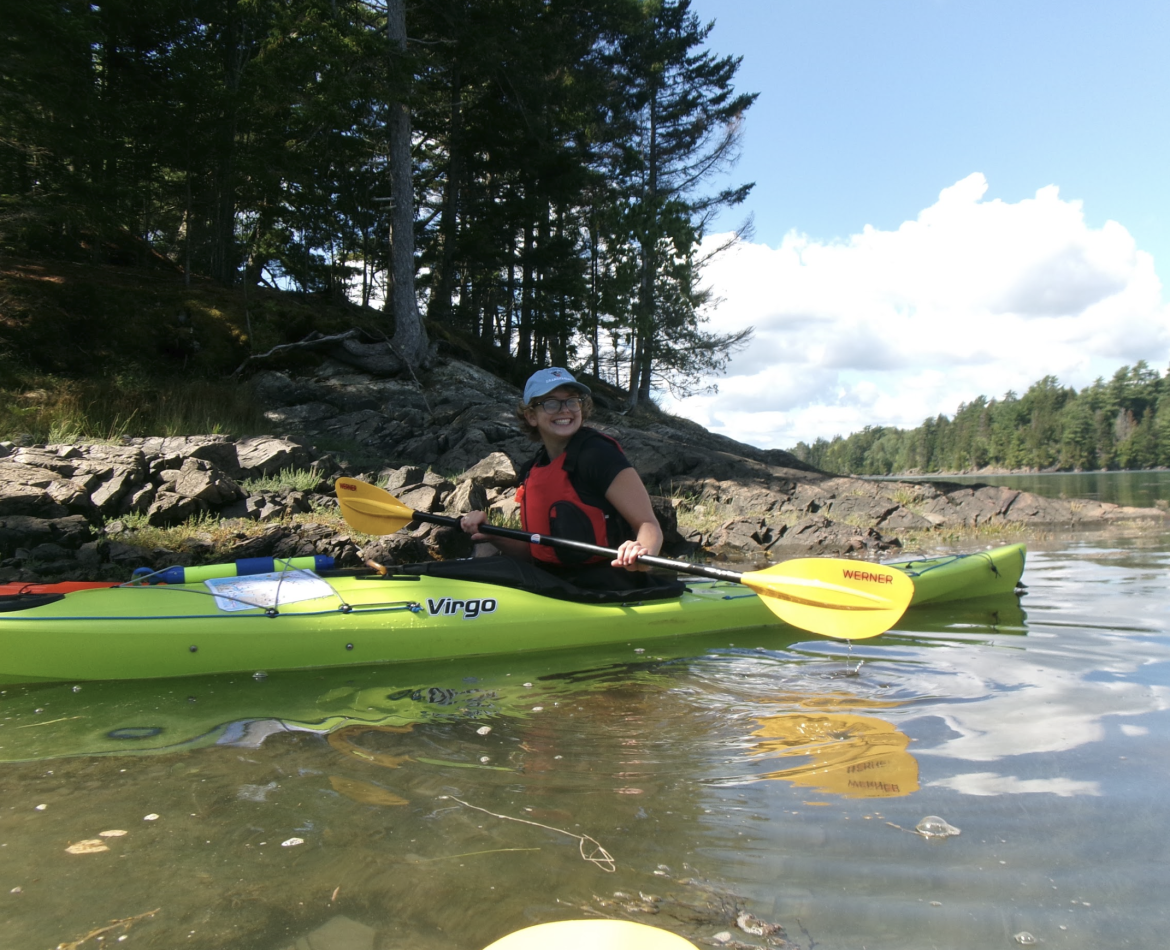
Students in the Tourism, Hospitality, and Outdoor Recreation (THOR) Institute’s August 2026 Vacationland course (REM 210: Nature-based Tourism and Sustainable Development, Maine Coastal Kayaking and Conservation) recently swapped traditional lecture halls for the waters and rugged coastline of Downeast Maine.
Rooted in experiential, place-based learning, the multi-day course introduced students to the core tenets of regional nature-based tourism, conservation, and coastal kayaking. Course evaluations highlighted the deep impact of this approach, with one student sharing, “The physicality of being out on the water and learning these topics firsthand was a ton of fun… It gave me a better understanding of how Downeast Maine truly is.”
Key Course Highlights
- Skill Building & On-Water Practice: Students gained hands-on instruction in kayaking safety, paddle strokes, and trip preparation before embarking on a multi-day coastal expedition. For many, overcoming safety drills like wet exits built lasting confidence, with one participant noting, “I was initially nervous about sea kayaking, but that first experience was encouraging… It made me feel much more confident.”
- Industry & Conservation Networking: Interactive sessions with local conservation professionals gave students firsthand insight into outdoor leadership careers and land trust operations. “Meeting with local stakeholders was incredibly valuable,” shared one student. “We got to see what their day-to-day was like and their passion for their job, which was inspiring.”
- Stewardship & Ethics: The itinerary emphasized Leave No Trace principles, field-based conservation activities, and local trail stewardship. Students came away with a deeper appreciation for trail maintenance and sustainable recreation, realizing “how hard people work to keep them up” and preserve Maine’s fragile ecosystems for future generations.
- Cultural & Community Engagement: The experience integrated Indigenous perspectives on land stewardship through visits with tribal environmental leaders. Students praised the unique opportunity to learn from the Passamaquoddy tribe, with multiple participants reporting that meeting regional leaders directly fueled new career goals in guiding, public interpretation, and environmental science.
By linking technical outdoor skills, sustainable tourism practices, land trust operations, and Indigenous perspectives, this latest Vacationland course exemplifies how THOR turns Maine’s natural landscapes into an interactive classroom. As one student summarized: “It was very fulfilling, challenging in all the good ways, and left me with a deeper understanding of Downeast Maine.”